

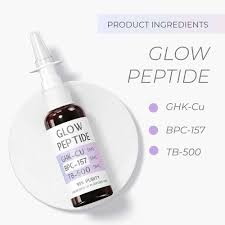
Peptide research continues to expand across the UK as laboratories investigate compounds that influence metabolism, cellular regeneration, and hormone signalling. Among the peptide combinations currently drawing attention in research circles is the GLOW protocol, a framework that studies several compounds together to observe their interaction within biological systems.
The GLOW peptide protocol is commonly discussed in relation to four research compounds that target different metabolic and cellular pathways. Because each component influences a different mechanism, researchers study the protocol to better understand how these pathways may interact.
This guide explores the science behind the GLOW peptide stack, the compounds involved, and why UK researchers are increasingly interested in studying this peptide protocol.
What Is the GLOW Peptide Protocol?
The GLOW protocol refers to a research approach that examines a combination of compounds associated with metabolic signalling and cellular processes. The acronym “GLOW” typically refers to four components commonly studied together:
- GHK-Cu (Copper Peptide)
- Lipo-C
- Oxytocin
- 5-Amino-1MQ
Each of these compounds has a different research focus. By examining them within a combined protocol, scientists can explore how various biological pathways function simultaneously.
This approach is particularly valuable when studying complex systems such as metabolism, hormone signalling, and cellular repair mechanisms.
Components of the GLOW Peptide Stack
Understanding the individual compounds involved in the GLOW protocol helps explain why the combination is often studied in metabolic and cellular research.
GHK-Cu (Copper Peptide)
GHK-Cu is a naturally occurring peptide that binds copper ions and has been widely studied for its role in cellular signalling, tissue regeneration, and skin biology. It is commonly examined in research focused on cellular repair pathways.
Lipo-C
Lipo-C refers to a group of compounds associated with metabolic research and nutrient processing. Scientists investigate these compounds when studying metabolic signalling and how the body utilises nutrients.
Oxytocin
Oxytocin is a peptide hormone that plays an important role in neuroendocrine signalling. Researchers frequently study oxytocin to understand how hormones influence behavioural and physiological processes.
5-Amino-1MQ
5-Amino-1MQ is a compound being investigated for its relationship with cellular metabolism and enzyme activity, particularly within metabolic pathways associated with energy utilisation.
Together, these compounds allow researchers to explore multiple physiological systems within a single research framework.
Why the GLOW Protocol Is Being Studied in the UK
The UK has a strong research ecosystem focused on biotechnology, metabolic science, and peptide development. As scientists search for new ways to study interconnected biological systems, protocols that combine several compounds have gained attention.
Researchers studying the GLOW protocol may investigate:
- Cellular regeneration signalling
- Hormonal communication pathways
- Metabolic activity and nutrient utilisation
- Interactions between metabolic and endocrine systems
This multi-system research approach can provide valuable insights into complex biological processes.
The Importance of Reliable Peptide Sources
High-quality peptides are essential for scientific research. Poor-quality compounds can lead to inconsistent results and unreliable data, which can compromise experimental outcomes.
When sourcing peptides in the UK, researchers typically look for suppliers that provide:
- High-purity peptide synthesis
- Consistent production batches
- Transparent product information
- Secure international delivery
- Proper laboratory-use labelling
Selecting a reliable supplier ensures that research materials meet the standards required for scientific investigation.
BuyPeptids: Supplying Research-Grade Peptides
BuyPeptids focuses on providing research-grade peptide compounds designed for laboratory use. The company works with laboratories and researchers worldwide who require reliable peptide materials for scientific studies.
Researchers choose BuyPeptids because the company offers:
- Carefully synthesised peptides
- Strict quality control processes
- Consistent batch reliability
- Secure shipping to the UK
- Professional customer support
These factors make BuyPeptids a trusted supplier for laboratories studying peptide protocols such as the GLOW stack.
Final Thoughts
The GLOW peptide protocol represents an interesting research framework for studying how multiple compounds interact within biological systems. By examining peptides such as GHK-Cu, Lipo-C, Oxytocin, and 5-Amino-1MQ, scientists can explore metabolic signalling, cellular regeneration pathways, and hormonal interactions.
As peptide research continues to grow in the UK, protocols like GLOW may play an important role in expanding scientific understanding of complex physiological systems.
For laboratories looking to study these compounds, sourcing high-quality research peptides from a trusted supplier is essential for achieving accurate and reproducible research results.
Leave A Comment