

Meta Title: Retatrutide vs Ozempic vs Mounjaro UK – Full Comparison | BuyPeptids
Meta Description: Compare Retatrutide, Ozempic, and Mounjaro in the UK. Learn key differences in mechanism, availability, and research status.
Introduction
As interest in advanced metabolic compounds grows in the UK, many people are comparing:
- Retatrutide
- Ozempic
- Mounjaro
While they are often grouped together, these compounds differ significantly in mechanism, approval status, and research maturity.
Important Disclaimer
This article is for informational purposes only.
It does not provide medical advice or treatment recommendations.
Quick Comparison Overview
| Feature | Retatrutide | Ozempic | Mounjaro |
|---|---|---|---|
| Mechanism | Triple agonist (GLP-1, GIP, Glucagon) | GLP-1 only | GLP-1 + GIP |
| Approval Status (UK) | Not approved | Approved | Approved |
| Availability | Research phase | Prescription | Prescription |
| Data Maturity | Emerging | Well-established | Growing |
Mechanism of Action
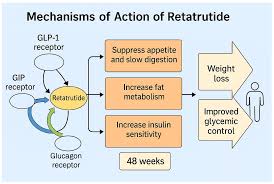
Retatrutide
Retatrutide targets three pathways:
- GLP-1 → appetite regulation
- GIP → metabolic signalling
- Glucagon → energy balance
This makes it the most complex and broad-acting of the three.
Ozempic
Ozempic contains semaglutide and works by:
- Slowing digestion
- Regulating appetite
- Supporting glucose control
It focuses on a single pathway (GLP-1).
Mounjaro
Mounjaro works on:
- GLP-1
- GIP
This dual mechanism provides a middle ground between Ozempic and Retatrutide.
Availability in the UK
Retatrutide
- Not approved by the Medicines and Healthcare products Regulatory Agency
- Limited to research contexts
- Not available via pharmacies
Ozempic
- Widely prescribed in the UK
- Available through healthcare providers
- Established supply chain
Mounjaro
- Approved more recently
- Increasing availability
- Growing clinical use
Results & Timeline Differences
Retatrutide
- Gradual, multi-phase progression
- Layered metabolic effects
- Longer-term research focus
Ozempic
- More predictable timeline
- Well-documented outcomes
- Stable progression
Mounjaro
- Often described as faster than GLP-1 alone
- Balanced progression
- Strong clinical data
Side Effect Profiles (General Overview)
Common Across All
- Digestive discomfort
- Appetite suppression
- Early adjustment phase effects
Key Differences
- Retatrutide → broader metabolic interaction
- Ozempic → more predictable profile
- Mounjaro → moderate complexity
Which One Is “Best”?
There is no universal “best” option.
It depends on:
- Availability
- Regulatory approval
- Individual response
- Research vs clinical context
UK Market Trends
In the UK:
- Ozempic remains highly established
- Mounjaro is rapidly gaining traction
- Retatrutide is generating early-stage curiosity and hype
Common Misconceptions
“Newer means better”
Newer compounds may have potential, but less long-term data.
“They all work the same”
Each has a different mechanism and profile.
“Retatrutide is just a stronger version”
It is different, not simply stronger.
Key Takeaways
- Retatrutide = triple-pathway, research-stage
- Ozempic = single-pathway, widely approved
- Mounjaro = dual-pathway, newer but approved
- Availability in the UK varies significantly
- Choice depends on context, not hype
Final Thoughts
The comparison between Retatrutide, Ozempic, and Mounjaro highlights how quickly the metabolic research space is evolving.
While Retatrutide represents a next-generation direction, Ozempic and Mounjaro remain the current clinical standards in the UK.
Leave A Comment