

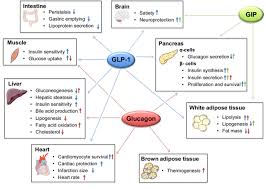
As interest in advanced metabolic research grows across the United Kingdom, comparisons between Retatrutide and Semaglutide have become increasingly common. While both compounds interact with metabolic pathways, their mechanisms, scope, and research implications differ significantly.
Overview: Two Different Generations
Semaglutide
- A single-pathway GLP-1 receptor agonist
- Well-studied and widely recognised in metabolic research
Retatrutide
- A triple agonist (GLP-1, GIP, glucagon)
- Represents a newer, more complex research approach
In simple terms:
- Semaglutide = focused mechanism
- Retatrutide = multi-system modulation
Mechanism of Action: Side-by-Side
Semaglutide
Targets:
- GLP-1 receptor only
Effects:
- Appetite suppression
- Slower gastric emptying
- Improved insulin signalling
Retatrutide
Targets:
- GLP-1
- GIP
- Glucagon receptor
Effects:
- Appetite regulation
- Enhanced nutrient utilisation
- Increased energy expenditure
Key Difference #1: Metabolic Coverage
Semaglutide focuses primarily on reducing intake, while Retatrutide expands into:
- Intake control (GLP-1)
- Nutrient processing (GIP)
- Energy output (glucagon)
This creates a broader metabolic framework in research settings.
Key Difference #2: Energy Expenditure
One major distinction is glucagon receptor activation.
- Semaglutide: Minimal direct impact on energy expenditure
- Retatrutide: Designed to increase metabolic rate and fat oxidation
This could lead to fundamentally different research outcomes.
Key Difference #3: Complexity of Response
Because Retatrutide interacts with three systems:
- Responses may be more dynamic
- Effects may vary more across models
- Research interpretation becomes more complex
Semaglutide, by contrast, offers a more predictable and isolated pathway.
Key Difference #4: Research Maturity
Within the United Kingdom:
- Semaglutide has extensive data and long-term study
- Retatrutide is still investigational, with ongoing trials
Comparative Summary Table
| Feature | Semaglutide | Retatrutide |
|---|---|---|
| Type | GLP-1 agonist | Triple agonist |
| Pathways | 1 | 3 |
| Appetite Control | Strong | Strong |
| Energy Expenditure | Limited | Enhanced |
| Complexity | Lower | Higher |
| Research Stage | Established | Emerging |
Which Is More Relevant for Research?
That depends on the objective:
- Focused appetite/metabolic signalling studies → Semaglutide
- Full-spectrum metabolic modulation research → Retatrutide
Each serves a different role rather than directly replacing the other.
UK Research Context
In the United Kingdom, both compounds are frequently explored in:
- Metabolic pathway studies
- Hormonal interaction research
- Energy balance modelling
However, Retatrutide’s multi-target design aligns more closely with emerging research trends focused on system-wide metabolic regulation.
Limitations to Consider
- Retatrutide’s long-term profile is still under investigation
- Triple agonism may introduce more variables in research outcomes
- Direct comparisons are still evolving as new data emerges
Final Thoughts
The comparison between Retatrutide and Semaglutide highlights a broader shift in metabolic research:
- From single-target precision
- Toward multi-pathway integration
Rather than competing directly, these compounds represent different stages of scientific advancement.
Leave A Comment